
The Next Evolution of Pinion EPS: Scalable Steering Solutions for a Changing Market
October 22, 2026
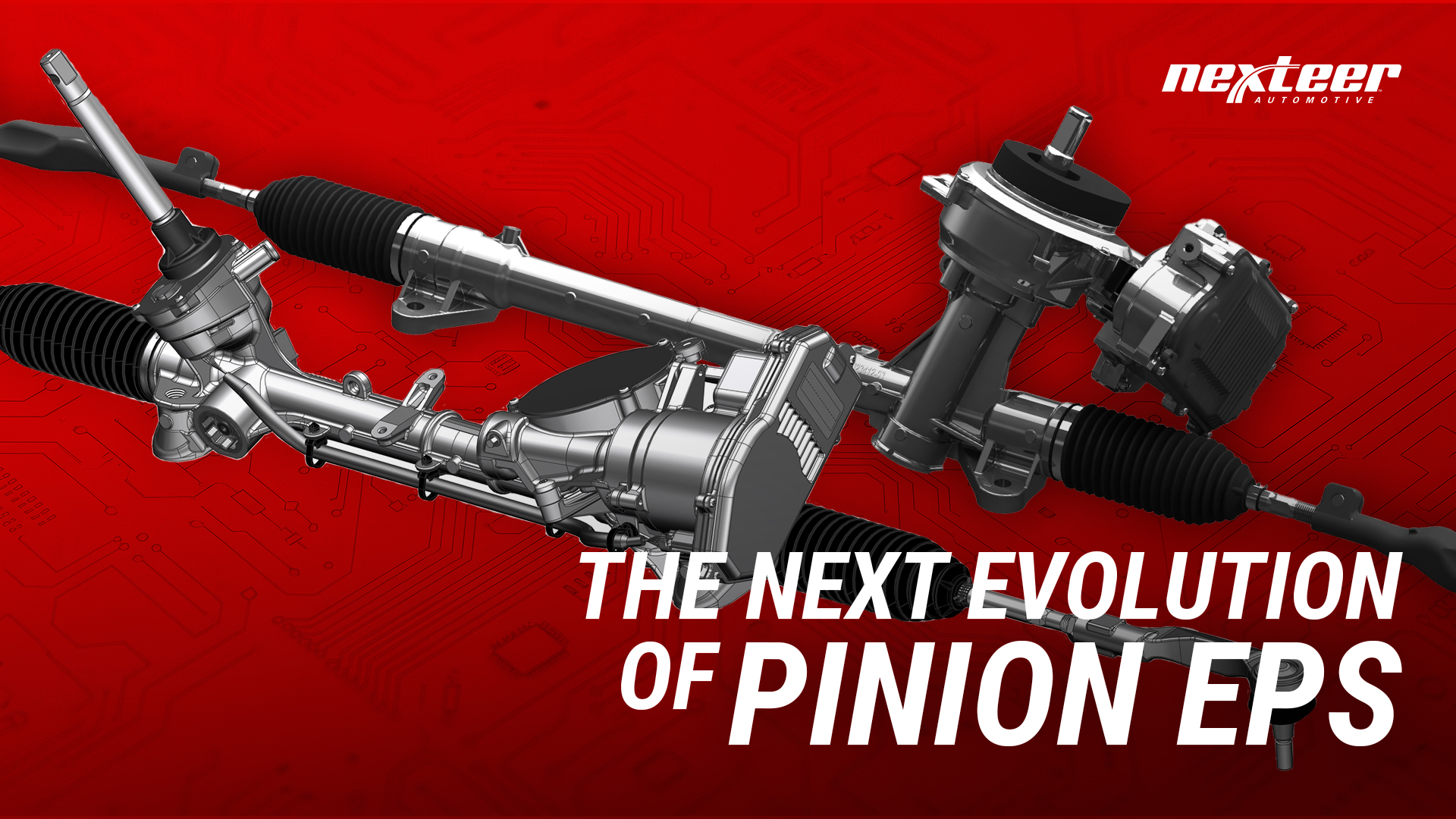
For years, Rack-Assist Electric Power Steering (REPS) has been the default choice for many larger vehicle applications, offering the steering assist capability needed to meet vehicle performance requirements. But as automotive platforms evolve and cost, efficiency and scalability become increasingly important, OEMs are taking a fresh look at Pinion-Assist Electric Power Steering (PEPS).
Today, Single-Pinion EPS (SPEPS) and Dual-Pinion EPS (DPEPS) are emerging as compelling solutions for a broader range of vehicle programs than ever before. Advances in architecture, output capability and commonized components are allowing PEPS technologies to support vehicle segments and applications that historically may have been considered the domain of REPS.
Why OEM Interest in Pinion EPS Is Growing
The shift is not being driven by lower steering loads. In fact, many vehicle platforms continue to demand higher steering performance and increased assist capability.
Instead, OEM priorities are evolving.
Across the industry, vehicle manufacturers face growing pressure to improve affordability and optimize architectures without compromising performance. As engineering teams develop next-generation vehicle platforms, they are evaluating steering systems through a different lens that balances performance targets with packaging, commonization and total system cost.
As a result, more programs are being evaluated for PEPS architectures that may have traditionally utilized REPS.
One Architecture Does Not Fit All
Growing interest in Pinion EPS does not diminish the importance of REPS. Instead, it expands OEM choice. Nexteer offers Single-Pinion EPS, Dual-Pinion EPS and Rack-Assist EPS solutions, allowing customers to select the architecture that best balances steering performance, packaging and cost objectives.
Single-Pinion EPS: Expanding Capability Through Scalability
Nexteer’s latest generation SPEPS architecture delivers scalable assist capability, compact packaging and common building blocks designed to support a broad range of vehicle applications. The architecture supports multiple output levels, including Ultra-High Output variants, helping extend the applicability of SPEPS into vehicle segments that previously required alternative solutions.
By leveraging common architecture elements across programs, OEMs can simplify integration, improve development efficiency, and increase component commonality across vehicle platforms while maintaining expected steering performance.
Dual-Pinion EPS: Balancing Performance and Flexibility
For applications demanding even greater steering assist and flexibility, Nexteer’s DPEPS architecture provides another scalable pathway. Designed to support larger and evolving vehicle platforms, DPEPS combines high output capability with packaging flexibility and steering performance optimization.
Nexteer’s latest Dual-Pinion solutions support C through D-segment vehicles, SUVs, sport vehicles and even small pickup applications, while continuing to push output capability higher to meet evolving customer needs. Commonized PEPS building blocks further help manage complexity and support efficient development across programs. For high-volume platforms, Nexteer’s cross-compatible SPEPS and DPEPS manufacturing lines allow OEM to use both architectures on the same platform, selecting the appropriate solution based on the steering loads of each vehicle variant.
Meeting OEMs Where the Market Is Going
Today’s PEPS opportunity reflects both changing market conditions and greater technology readiness. One important advancement is a wear-compensation design for the worm-gear mechanism, which enables lower friction and robust noise, vibration and harshness (NVH) performance throughout the life of the vehicle.
OEMs are increasingly looking for steering solutions that can deliver the right balance of performance, cost efficiency, packaging flexibility and platform scalability. At the same time, advancements in Pinion EPS architectures are expanding the range of applications these systems can support.
This convergence is creating new opportunities across vehicle segments, powertrain types and global markets.
A Portfolio Built for Choice
Nexteer’s approach is not centered on a single steering architecture. Instead, it is built around offering the right technology for the right application.
From CEPS and Pinion EPS to REPS, Rear-Wheel Steering and Steer-by-Wire, Nexteer provides a comprehensive steering portfolio that enables OEMs to optimize performance, safety, efficiency and cost across diverse vehicle platforms.
As more manufacturers reassess steering architectures for future programs, scalable Single-Pinion and Dual-Pinion EPS solutions are becoming an increasingly important part of the conversation. With proven expertise across the steering spectrum, Nexteer is well positioned to help OEMs evaluate the opportunities and tradeoffs of the next generation of Pinion EPS.